

Upon request and for an additional fee, our city tours and guided tours are also available in various foreign languages.
We are here for you. Monday to Friday from 9:00 am to 5:00 pm
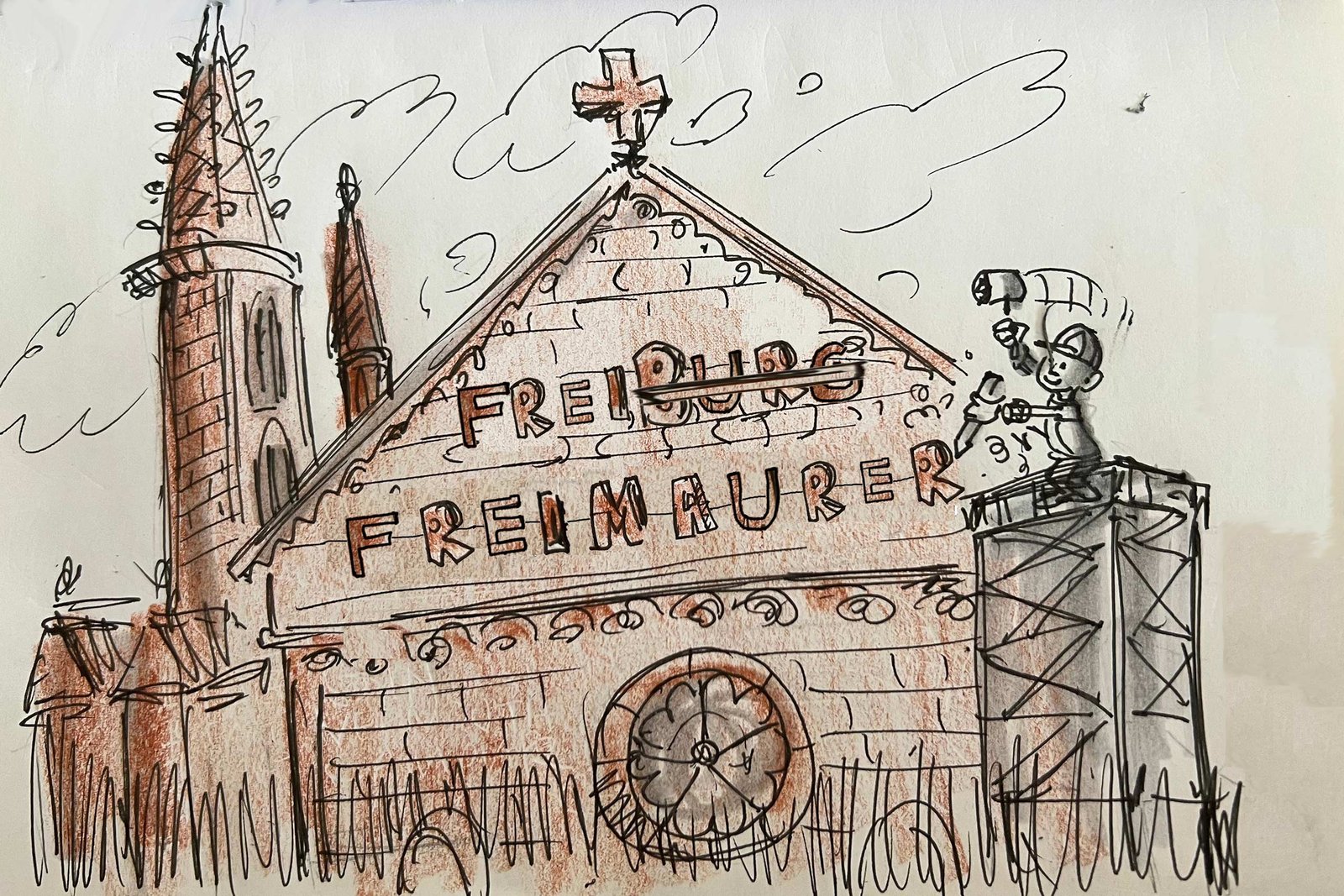
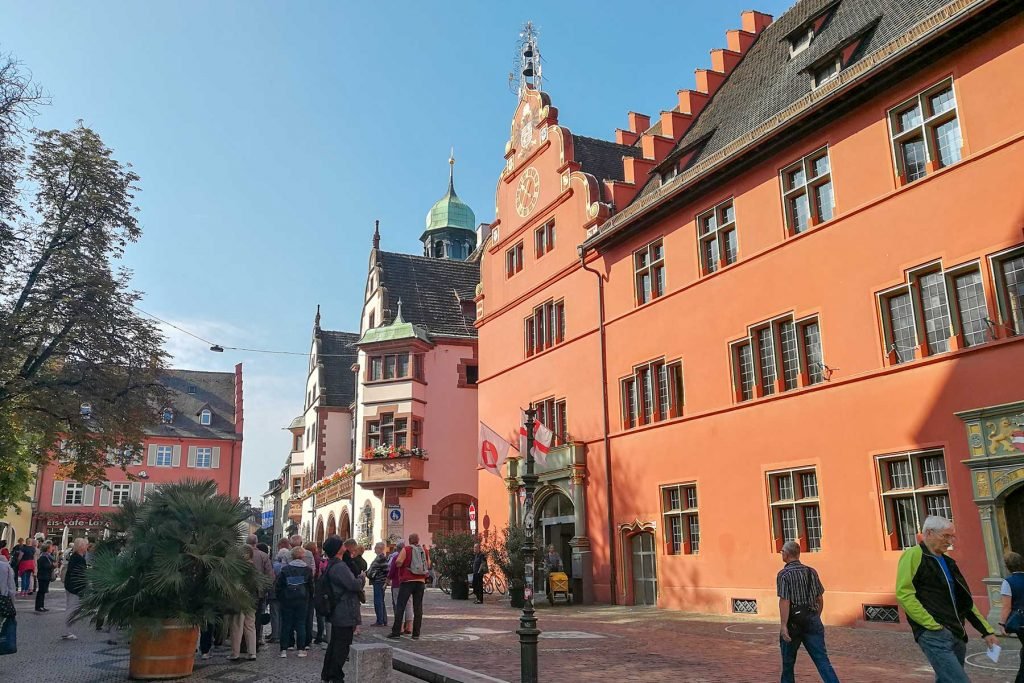
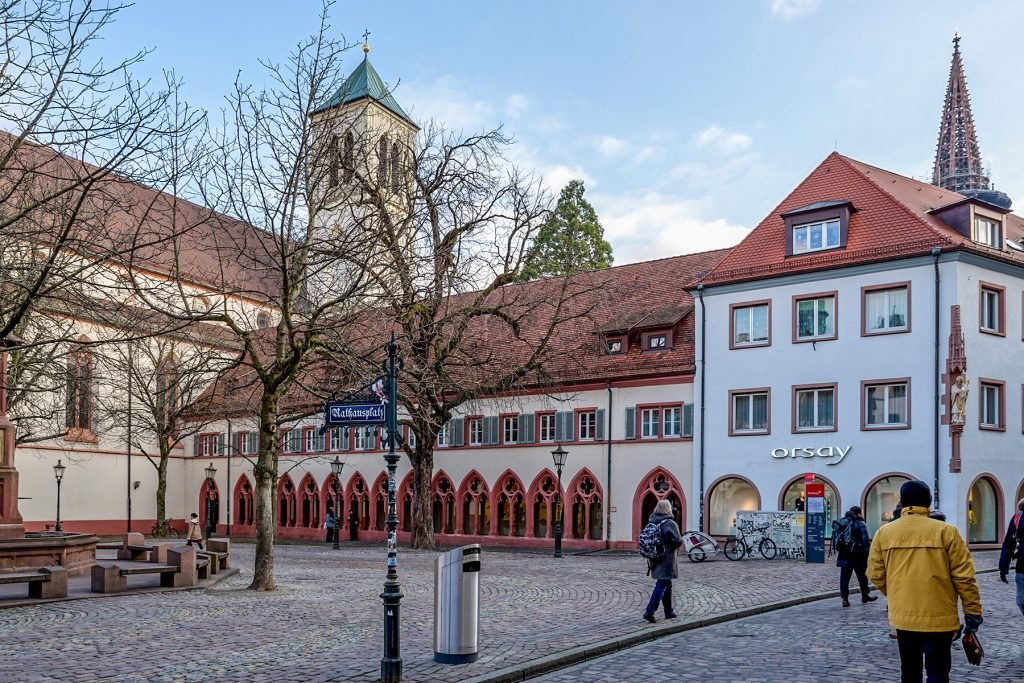
The “Freemasons of Freiburg” city tour sheds light on a little-known chapter in Freiburg’s history. Starting at Rathausplatz, the tour winds through Rathausgasse and the university district, past the Martinstor, and on to Münsterplatz. Along the way, visitors discover traces of Freiburg’s Masonic heritage in monuments, facades, pavement reliefs, inscriptions, and historical biographies.
The tour explores the connections between Freemasonry, the university, political liberalism, workers’ education, the press, the Catholic Church, and urban development.
The lodge “Zur edlen Aussicht” is documented in Freiburg as early as 1784. An important nucleus for its development was the Jesuit-influenced university. The tour therefore focuses not only on symbols and lodge names, but above all on the people who shaped city life as university presidents, parliamentarians, publishers, clergy, artisans, or doctors.
In this way, familiar places can be seen in a new light from an unusual perspective.
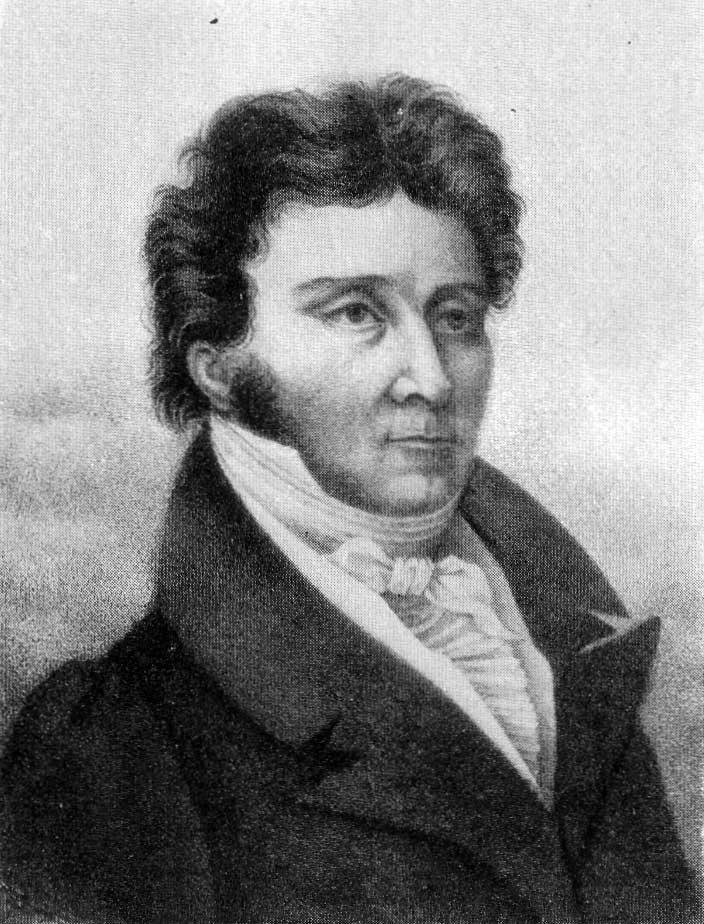
The search for clues begins at Rathausplatz with Karl von Rotteck. The university rector, liberal thinker, parliamentarian, and Freemason epitomizes the connection between the Enlightenment and political participation.
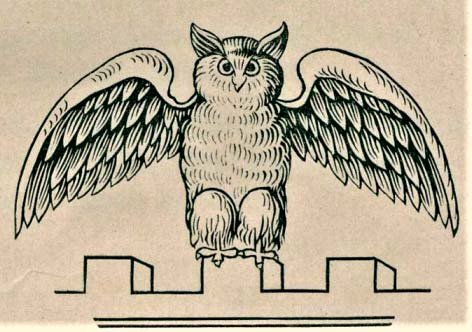
On Rathausgasse, participants will come across a sculpture of an owl, the former Stefan Meier tobacco warehouse, and Rotteck’s former residence. Stefan Meier opposed the Nazi Enabling Act and died in 1944 at the Mauthausen concentration camp. The changing locations of the Rotteck monument also tell a piece of the city’s political history.
At the Old Synagogue Square, the Freimaurer Freiburg city tour delves into the history of the university. A relief in the pavement depicting an owl perched on a book symbolizes knowledge and social openness.
The symbol is associated with Professor Caspar Ruef, who is said to have advocated for opening the university not only to students but to everyone.
Around the Bermuda Triangle and the Martinstor, architectural details serve as evidence of broader historical contexts.
At the Haus zur Lieben Hand, rain gutters shaped like Nuremberg funnels pay homage to the Freemason Fehrenbach and the Workers’ Educational Association of that time, which later became the adult education center. The Poppen publishing family and its connection to the *Badische Zeitung* are also part of the tour.
At the Martinstor, visitors encounter the name Caluri, who is identified as the lodge’s master of ceremonies. The Austrian double-headed eagle also evokes a connection to Emperor Joseph II and his Edict of Tolerance of 1781.
In front of the Museum of Nature and Man, another owl sculpture leads to a co-founder of the museum and chronicler of the early history of Freemasonry in Freiburg.
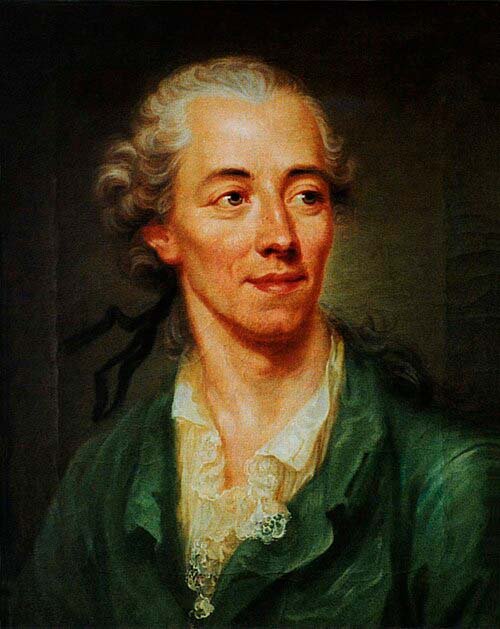
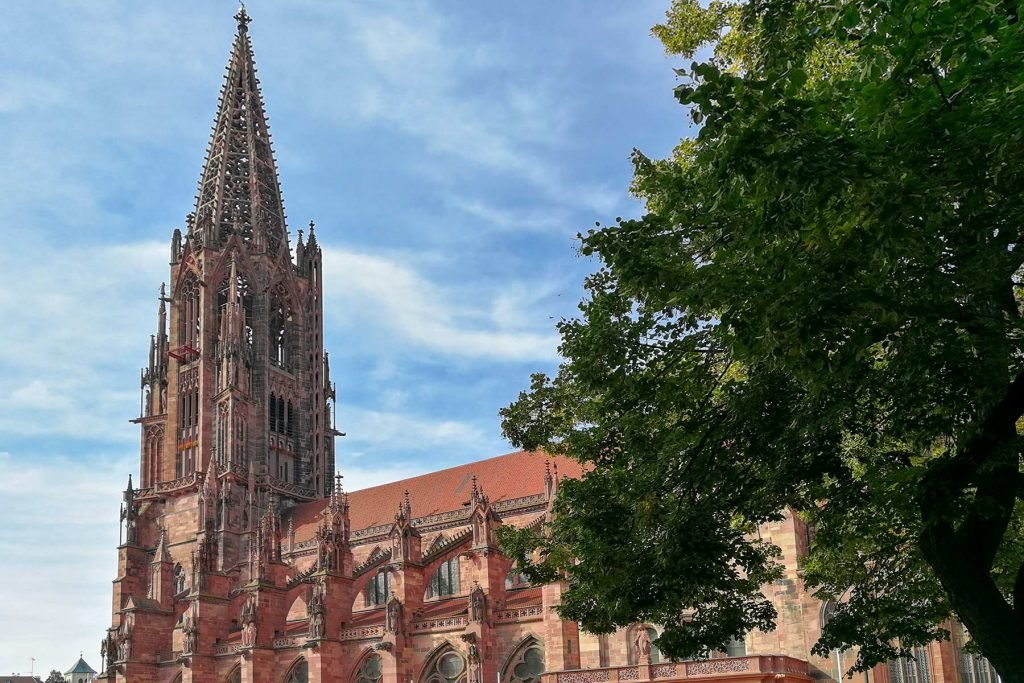
At Münsterplatz, the tour explores the relationship between Freemasonry and the Catholic Church. The biography of Karl Schwarzl, the cathedral’s pastor, shows that the two were not fundamentally incompatible: He was an active founding member of the Freiburg Lodge in 1784.
At the Historic Department Store, the timeline extends all the way to the democratic rebirth following World War II.
This tour focuses on details that many people overlook: owls in the pavement, keystones, monument pedestals, facade ornamentation, and heraldic symbols.
They are not presented as mysterious symbols in isolation, but are placed within the context of Freiburg’s accessible local history. The history of Freemasonry in Freiburg thus serves as a gateway to more than two centuries of intellectual, educational, and democratic history.
On the way back, more traces can be found at the Raubrunnen and the former Café Voit, where the founding meeting of the Freiburg Lodge is said to have taken place in 1784.
Discover Freiburg from an unusual perspective. Learn more about historical figures, Masonic symbols, and the connections between the university, politics, education, the church, and urban society.
For more detailed information, see the article “Historical Background on Freemasonry in Freiburg.” To find out whether the topic, itinerary, and content are suitable for your participants, see “Is the tour suitable for your group?” For information on price, duration, and group size, see “All booking details for groups.”
The walking tour connects well-known sites in downtown Freiburg with details that many passersby overlook. Each stop offers a new perspective on the history of Freiburg’s Freemasons.
| Cookie | Duration | Description |
|---|---|---|
| cookielawinfo-checkbox-advertisement | This cookie is used to record the user's consent for cookies in the "Advertising" category. | |
| cookielawinfo-checkbox-analytics | This cookie is used to record the user's consent for cookies in the "Analytics" category. | |
| cookielawinfo-checkbox-functional | The cookie is set to record the user's consent for cookies in the "Functional" category. | |
| cookielawinfo-checkbox-necessary | This cookie is used to record the user's consent for cookies in the "Necessary" category. | |
| cookielawinfo-checkbox-others | This cookie is used to store the user's consent for cookies in the "Others" category. | |
| cookielawinfo-checkbox-performance | This cookie is used to store the user's consent for cookies in the "Performance" category. |
| Cookie | Duration | Description |
|---|---|---|
| CookieLawInfoConsent | No description |